Sides
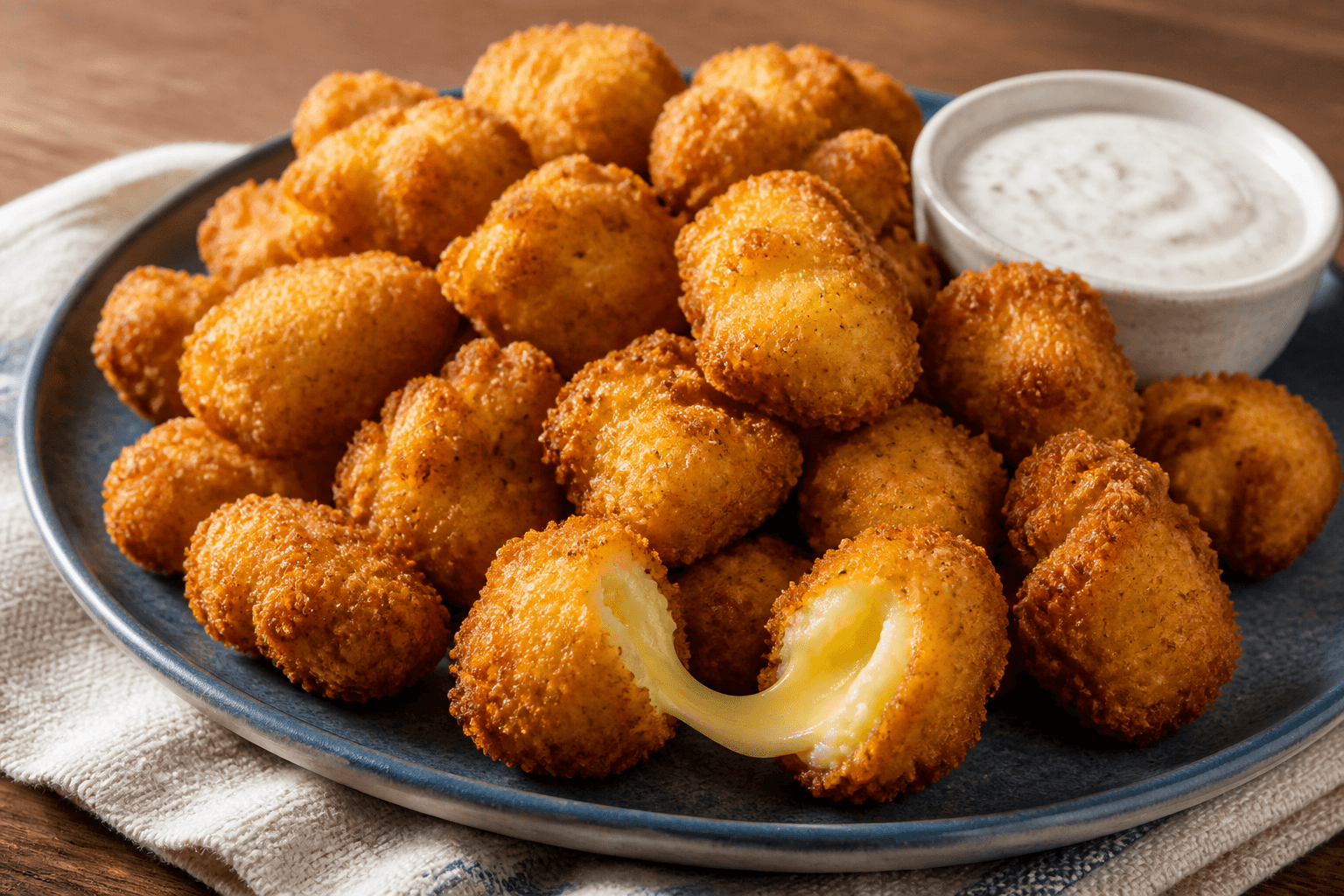
Culver's Inspired Wisconsin Cheese Curds
Mild cheddar cheese curds coated in a seasoned cracker-and-breadcrumb crust, fried until deeply golden with a stretchy, just-melted center.
Inspired by Culver's
Prep
30 min + freeze
Cook
20 min
Serves
6 servings
Difficulty
Medium
Cooking Tools
Pantry match
Uses the current servings and temporary recipe changes.
Missing 12 ingredients
- • 1 pound fresh cheddar cheese curds
- • 1/2 cup all-purpose flour
- • 1 teaspoon garlic powder
- • 1/2 teaspoon onion powder
- • 1/2 teaspoon paprika
- • 1/2 teaspoon kosher salt
- • 1/4 teaspoon black pepper
- • 2 large eggs
- • 2 tablespoons whole milk
- • 1 cup finely crushed butter crackers
- • 1 cup fine plain breadcrumbs
- • 6 cups canola or peanut oil, for frying
View ingredient-by-ingredient match
- 1 pound fresh cheddar cheese curdsMissing
- 1/2 cup all-purpose flourMissing
- 1 teaspoon garlic powderMissing
- 1/2 teaspoon onion powderMissing
- 1/2 teaspoon paprikaMissing
- 1/2 teaspoon kosher saltMissing
- 1/4 teaspoon black pepperMissing
- 2 large eggsMissing
- 2 tablespoons whole milkMissing
- 1 cup finely crushed butter crackersMissing
- 1 cup fine plain breadcrumbsMissing
- 6 cups canola or peanut oil, for fryingMissing
Optional ingredients are not counted as required.
Cook smarter
- Read the full method once before starting.
- Prep ingredients first for a smoother cook.
- Use the print button for a cleaner kitchen copy.
Guided cooking
Cook one clear step at a time
Your place is saved on this device.
Method
Recipe notes
A complete double coating and two short freezer rests are more important than a long fry. The goal is to brown the crumbs before the curd melts enough to escape, so use small batches and recover the oil temperature each time.
Planning, storage, and serving
Storage and reheating
Refrigerate fried curds within 2 hours and use within 3 days. Reheat in a 400°F oven or air fryer just until crisp and hot; microwaving makes the coating soft and the cheese rubbery.
Make-ahead tips
Bread the curds, freeze them in one layer until firm, then transfer to an airtight freezer container for up to 1 month. Fry directly from frozen, adding roughly 15 to 30 seconds.
What to serve with it
- - Ranch or spicy ranch
- - Apple-cabbage slaw
- - Tomato soup for dipping
Equipment needed
- - Heavy pot with lid
- - Frying thermometer
- - Wire rack and sheet pan
Difficulty explained
Breaded curds cook very quickly; a sealed coating, correct oil temperature, and small batches are necessary to melt the cheese without emptying it into the fryer.
Recipe calculator
Nutrition facts
Alternatives
Apply a reviewed substitution to this temporary working copy. The published recipe stays unchanged.
Browse reviewed options
Canola oil
Use canola oil in the same amount for high-heat frying.
2% milk
Use the same amount of 2% milk for a straightforward lower-fat swap.
1-to-1 gluten-free baking flour
Use a commercial cup-for-cup blend that includes xanthan gum.
Type the ingredient you're missing — we'll find what you can use instead.
Pitfalls to Watch Out For
- Exposed cheese melts through instantly, so inspect each breaded curd and patch bare spots with egg and crumbs.
- Oil below 340°F delays browning and gives the cheese time to leak; oil much hotter than 365°F burns the crumbs.
- Freshly fried curds can cause severe mouth burns even when the coating feels cool enough to touch; rest them before eating.
Nutrition Context
- Cheese curds provide protein and calcium but are rich in sodium and saturated fat, and the fried coating adds refined carbohydrate and oil.
- Treating a small handful as a shared appetizer and pairing it with vegetables creates a more balanced serving context.
FAQ
Why do cheese curds leak while frying?
The coating has a bare spot, the curds were too warm, or the oil was too cool to set the crust quickly.
Do I need fresh squeaky curds?
Fresh curds give the most characteristic texture, but refrigerated cheddar curds still work when dried and chilled well.
Can I freeze breaded curds?
Yes. Freeze in one layer, transfer to an airtight container, and fry directly from frozen within 1 month.
Why mix cracker crumbs and breadcrumbs?
Crackers add a buttery restaurant-style flavor while fine breadcrumbs fill gaps and create a more secure coating.
Can I bake them?
Baking usually melts the cheese before the crumb crust browns. An air fryer gives a better non-deep-fried result, though some leakage is still possible.
What sides pair best with this dish?
Good pairings include Ranch or spicy ranch; Apple-cabbage slaw; Tomato soup for dipping. Choose one or two based on how substantial you want the meal to be.