

Pork
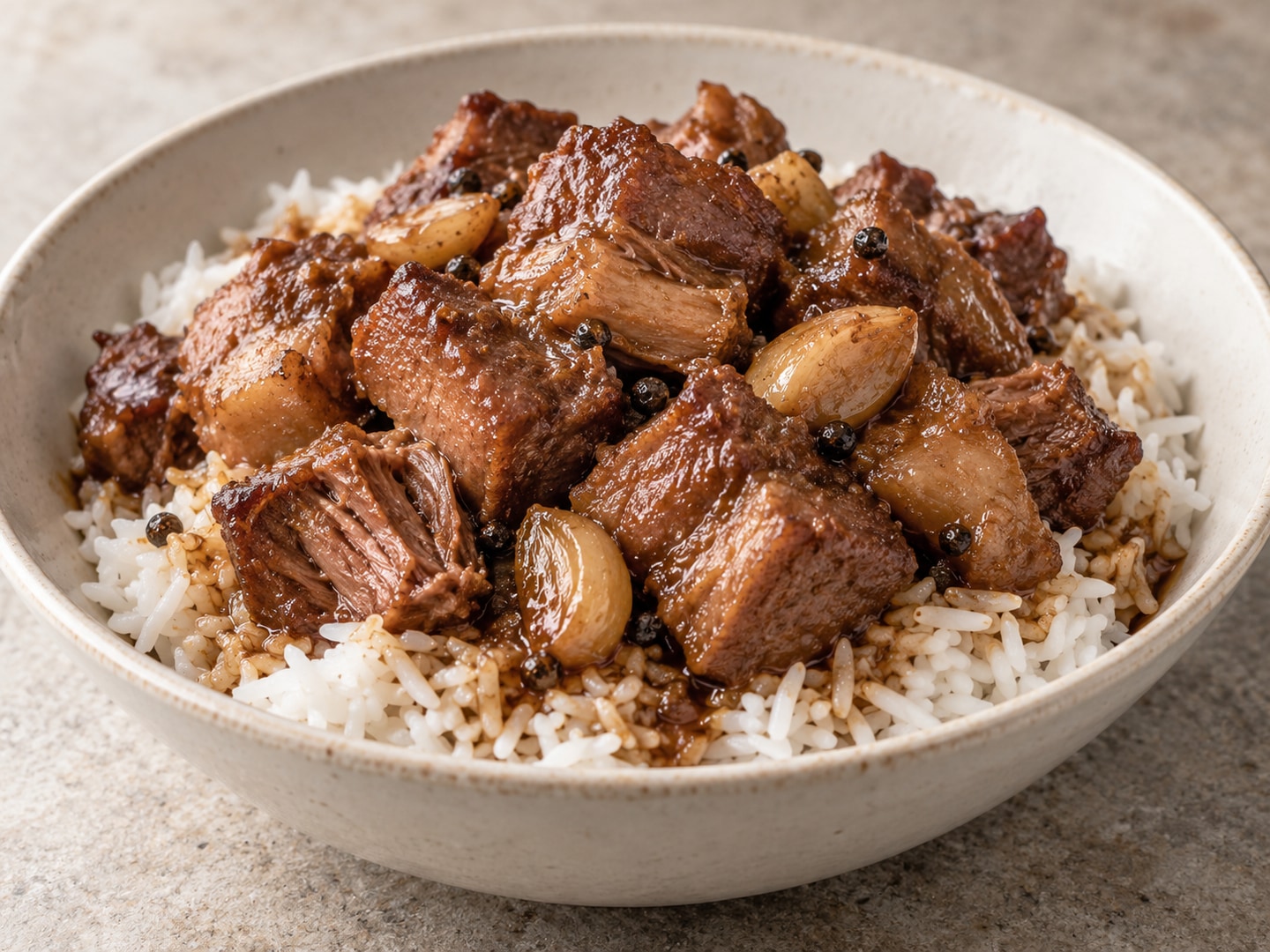
Garlic & Vinegar Pork Adobo
Pork shoulder slowly simmers with vinegar, soy sauce, garlic, bay leaves, and peppercorns, then finishes in a glossy reduced sauce over steamed rice.
Inspired by Filipino-inspired vinegar and soy braises
Prep
15 min
Cook
75 min
Serves
4 servings
Difficulty
Easy
Pantry match
Uses the current servings and temporary recipe changes.
Missing 11 ingredients
- • 1 1/2 pounds boneless pork shoulder, cut into 1 1/2-inch cubes
- • 1 tablespoon neutral oil
- • 8 garlic cloves, lightly crushed
- • 1/3 cup reduced-sodium soy sauce
- • 1/3 cup cane vinegar or white vinegar
- • 1 cup water
- • 2 dried bay leaves
- • 1 teaspoon whole black peppercorns
- • 1 teaspoon brown sugar
- • 1 cup dry jasmine rice
- • 1 1/2 cups water, for the rice
View ingredient-by-ingredient match
- 1 1/2 pounds boneless pork shoulder, cut into 1 1/2-inch cubesMissing
- 1 tablespoon neutral oilMissing
- 8 garlic cloves, lightly crushedMissing
- 1/3 cup reduced-sodium soy sauceMissing
- 1/3 cup cane vinegar or white vinegarMissing
- 1 cup waterMissing
- 2 dried bay leavesMissing
- 1 teaspoon whole black peppercornsMissing
- 1 teaspoon brown sugarMissing
- 1 cup dry jasmine riceMissing
- 1 1/2 cups water, for the riceMissing
Cook smarter
- Read the full method once before starting.
- Prep ingredients first for a smoother cook.
- Use the print button for a cleaner kitchen copy.
Guided cooking
Cook one clear step at a time
Your place is saved on this device.
Method
Recipe notes
Browning supplies roasted flavor, while the covered simmer softens shoulder without drying it. Do not substitute lean tenderloin for the same long braise. The vinegar becomes rounder as the sauce reduces; this is a home version, and regional adobo recipes vary.
Planning, storage, and serving
Storage and reheating
Refrigerate pork and rice promptly in separate shallow containers and use within 3–4 days. Reheat portions to 165 F, adding a little water to the sauce; freeze the pork for up to 2 months.
Make-ahead tips
Braise the pork a day ahead, refrigerate it in its sauce, and lift off excess solidified fat before reheating gently. Cook fresh rice or cool cooked rice promptly in shallow portions.
What to serve with it
- - Steamed bok choy
- - Cucumber slices
- - Sauteed green beans
Equipment needed
- - Heavy pot with lid
- - Rice saucepan with lid
- - Wooden spoon and tongs
Difficulty explained
The active work is browning and measuring; a low covered simmer does the rest, with tenderness rather than the clock deciding when the pork is ready.
Recipe calculator
Nutrition facts
Alternatives
Apply a reviewed substitution to this temporary working copy. The published recipe stays unchanged.
Browse reviewed options
Granulated sugar plus molasses
For each cup, mix 1 cup granulated sugar with 1 tablespoon molasses.
Tamari
Use tamari in the same amount for a similar savory profile.
Type the ingredient you're missing — we'll find what you can use instead.
Pitfalls to Watch Out For
- Packing all the pork into the pot at once traps moisture and prevents the initial browning.
- Boiling hard with the lid off throughout cooking reduces the liquid before the shoulder can soften.
- Reducing the sauce until almost dry concentrates the salt too far; stop while it still spoons easily over rice.
Nutrition Context
- The estimate includes one quarter of the pork, sauce, and rice; shoulder fat varies and affects the final energy estimate.
- Reduced-sodium soy sauce still contributes substantial sodium. The measured sauce is a seasoning, so avoid adding unlisted salt before tasting.
FAQ
Can I use pork loin?
Loin is leaner and becomes dry during a long simmer. Shoulder is the better cut for this fork-tender braise.
Must I marinate the pork first?
No. This version builds flavor through browning and simmering, so the stated time does not include a marinade.
Why is the pork still firm after an hour?
Shoulder sometimes needs longer. Add a splash of water, cover, and simmer gently until a fork enters easily.
Can I omit the sugar?
Yes. It rounds the vinegar slightly but is not needed for the meat to cook or the sauce to reduce.
Should I eat the whole peppercorns?
They are edible but assertive. Leave them in for cooking and remove visible ones from a serving if preferred.
What sides pair best with this dish?
Good pairings include Steamed bok choy; Cucumber slices; Sauteed green beans. Choose one or two based on how substantial you want the meal to be.