
Sides
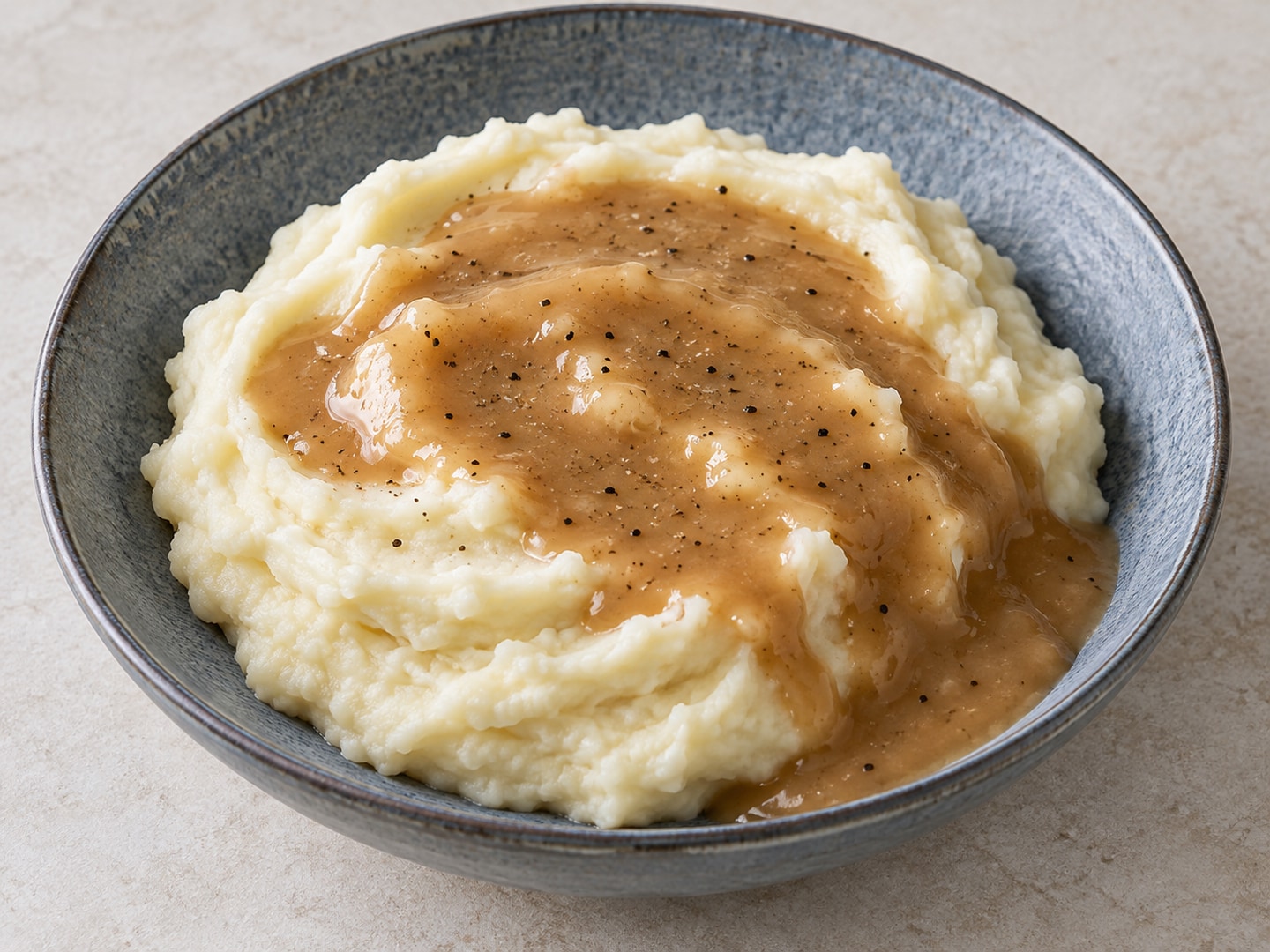
KFC Inspired Mashed Potatoes & Gravy
Creamy mashed potatoes topped with rich, savory brown gravy for the ultimate comfort food side dish. Perfect alongside fried chicken, biscuits, or roasted meats.
Inspired by KFC
Prep
20 min
Cook
25 min
Serves
6 servings
Difficulty
Easy
Cooking Tools
Pantry match
Uses the current servings and temporary recipe changes.
Missing 9 ingredients
- • 2 pounds russet potatoes
- • 4 tablespoons butter
- • 1/2 cup whole milk
- • Salt and black pepper
- • 2 tablespoons butter for the gravy
- • 2 tablespoons all-purpose flour
- • 2 cups chicken broth
- • 1/2 teaspoon onion powder
- • 1/2 teaspoon garlic powder
View ingredient-by-ingredient match
- 2 pounds russet potatoesMissing
- 4 tablespoons butterMissing
- 1/2 cup whole milkMissing
- Salt and black pepperMissing
- 2 tablespoons butter for the gravyMissing
- 2 tablespoons all-purpose flourMissing
- 2 cups chicken brothMissing
- 1/2 teaspoon onion powderMissing
- 1/2 teaspoon garlic powderMissing
Optional ingredients are not counted as required.
Cook smarter
- Read the full method once before starting.
- Prep ingredients first for a smoother cook.
- Use the print button for a cleaner kitchen copy.
Guided cooking
Cook one clear step at a time
Your place is saved on this device.
Method
Recipe notes
Start potatoes in cold salted water so the centers and edges cook evenly. Let drained potatoes steam dry for a minute, then mash before adding warm milk; excess water is a common cause of loose potatoes.
Planning, storage, and serving
Storage and reheating
Refrigerate potatoes and gravy in separate shallow containers within 2 hours and use within 3 days. Reheat potatoes with a splash of milk and gravy in a saucepan to a simmer; freeze gravy up to 1 month, but potatoes may become grainy after freezing.
Make-ahead tips
Make the gravy up to 2 days ahead. Peel and cut potatoes a few hours early and hold them submerged in cold water in the refrigerator, then drain and cook close to serving.
What to serve with it
- - Fried or roasted chicken
- - Green beans or corn
- - Warm biscuits
Equipment needed
- - Large pot
- - Potato masher or ricer
- - Small saucepan and whisk
Difficulty explained
This easy side uses two simple preparations; even potato pieces and a lump-free roux are the key details.
Recipe calculator
Nutrition facts
Alternatives
Apply a reviewed substitution to this temporary working copy. The published recipe stays unchanged.
Browse reviewed options
2% milk
Use the same amount of 2% milk for a straightforward lower-fat swap.
1-to-1 gluten-free baking flour
Use a commercial cup-for-cup blend that includes xanthan gum.
Plant-based butter
Use a firm, baking-style plant butter in the same amount.
Type the ingredient you're missing — we'll find what you can use instead.
Pitfalls to Watch Out For
- Overmixing ruptures too much starch and creates gummy potatoes; mash only until smooth.
- Adding cold milk cools and tightens the potatoes; warm it first and add gradually.
- If gravy lumps, whisk vigorously or strain it; if it is too thick, add warm broth a tablespoon at a time.
Nutrition Context
- Potatoes provide carbohydrate, potassium, and some fiber; butter and milk add saturated fat, while broth and seasoning drive sodium.
- A smaller gravy ladle or lower-sodium broth can meaningfully reduce sodium and richness.
FAQ
Why start potatoes in cold water?
Cold water lets the centers and exteriors heat together. Dropping chunks into boiling water can leave firm centers and waterlogged edges.
How do I prevent gluey mashed potatoes?
Drain thoroughly and mash only until smooth. Blenders and food processors overwork potato starch and create a sticky texture.
Why should the milk be warm?
Warm milk blends without cooling or tightening the potatoes. Add it gradually so the mash does not become loose.
How do I keep gravy from forming lumps?
Cook butter and flour into a smooth roux, then whisk in broth slowly. Maintain a gentle simmer while it thickens.
Can the potatoes and gravy be reheated?
Refrigerate them separately. Reheat potatoes with milk and butter, and loosen gravy with broth while whisking on low heat.
What sides pair best with this dish?
Good pairings include Fried or roasted chicken; Green beans or corn; Warm biscuits. Choose one or two based on how substantial you want the meal to be.