

Noodles
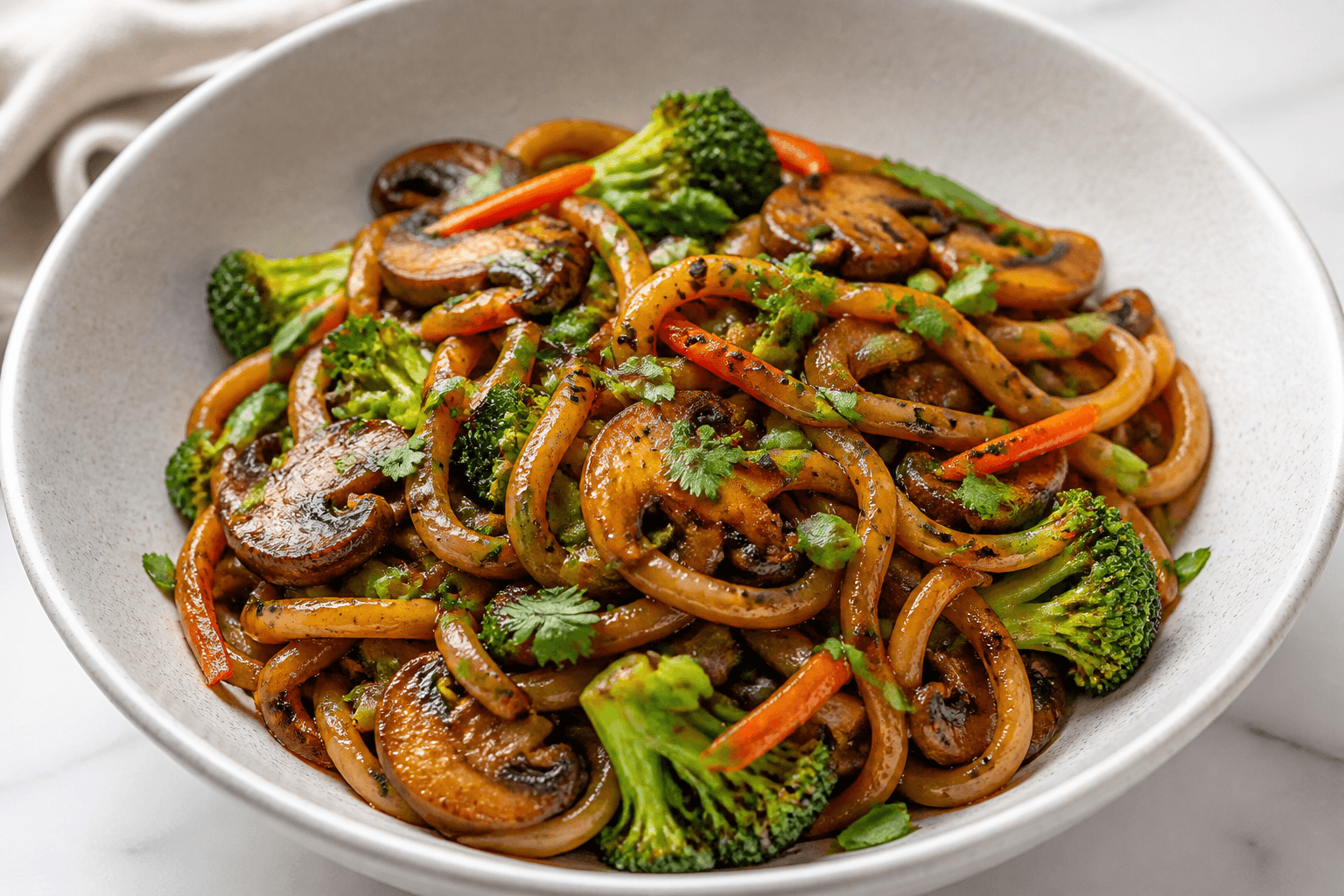
Noodles & Company Inspired Japanese Pan Noodles
Chewy udon caramelized in a sweet-savory soy glaze with crisp broccoli, mushrooms, carrots, black sesame, and cilantro.
Inspired by Noodles & Company
Prep
20 min
Cook
15 min
Serves
4 servings
Difficulty
Easy
Cooking Tools
Pantry match
Uses the current servings and temporary recipe changes.
Missing 17 ingredients
- • 24 ounces shelf-stable or frozen udon noodles
- • 1/3 cup low-sodium soy sauce
- • 3 tablespoons mirin
- • 2 tablespoons packed brown sugar
- • 1 tablespoon rice vinegar
- • 2 teaspoons toasted sesame oil
- • 2 teaspoons finely grated fresh ginger
- • 2 garlic cloves, finely grated
- • 1 tablespoon cornstarch
- • 3 tablespoons water
- • 2 tablespoons neutral oil, divided
- • 8 ounces cremini mushrooms, sliced 1/4 inch thick
- • 3 cups small broccoli florets
- • 1 large carrot, cut into thin matchsticks
- • 3 scallions, sliced
- • 2 tablespoons chopped cilantro
- • 2 teaspoons black sesame seeds
View ingredient-by-ingredient match
- 24 ounces shelf-stable or frozen udon noodlesMissing
- 1/3 cup low-sodium soy sauceMissing
- 3 tablespoons mirinMissing
- 2 tablespoons packed brown sugarMissing
- 1 tablespoon rice vinegarMissing
- 2 teaspoons toasted sesame oilMissing
- 2 teaspoons finely grated fresh gingerMissing
- 2 garlic cloves, finely gratedMissing
- 1 tablespoon cornstarchMissing
- 3 tablespoons waterMissing
- 2 tablespoons neutral oil, dividedMissing
- 8 ounces cremini mushrooms, sliced 1/4 inch thickMissing
- 3 cups small broccoli floretsMissing
- 1 large carrot, cut into thin matchsticksMissing
- 3 scallions, slicedMissing
- 2 tablespoons chopped cilantroMissing
- 2 teaspoons black sesame seedsMissing
Cook smarter
- Read the full method once before starting.
- Prep ingredients first for a smoother cook.
- Use the print button for a cleaner kitchen copy.
Guided cooking
Cook one clear step at a time
Your place is saved on this device.
Method
Recipe notes
A wide, very hot pan and dry noodles are what create the signature caramelized edges. The cornstarch glaze thickens within seconds, so have every vegetable cooked and every garnish ready before the sauce enters the pan.
Planning, storage, and serving
Storage and reheating
Refrigerate cooled noodles within 2 hours for up to 3 days. Reheat in a hot skillet with 1 to 2 tablespoons water to loosen the glaze; repeated microwaving can make udon overly soft.
Make-ahead tips
Mix the sauce and cut the vegetables up to 2 days ahead. Keep them in separate covered containers and wait to loosen the udon until just before stir-frying.
What to serve with it
- - Crisp cucumber salad
- - Steamed edamame
- - Miso soup
Equipment needed
- - Large wok or 12-inch skillet
- - Large pot
- - Tongs or wok spatula
Difficulty explained
The prep is simple and cooking is quick; success depends on high heat, a large pan, and having the sauce ready before stir-frying begins.
Recipe calculator
Nutrition facts
Alternatives
Apply a reviewed substitution to this temporary working copy. The published recipe stays unchanged.
Browse reviewed options
Granulated sugar plus molasses
For each cup, mix 1 cup granulated sugar with 1 tablespoon molasses.
Tamari
Use tamari in the same amount for a similar savory profile.
Arrowroot starch
Use an equal amount of arrowroot starch for thickening or crisp coatings.
Type the ingredient you're missing — we'll find what you can use instead.
Pitfalls to Watch Out For
- Wet noodles steam rather than sear, so drain thoroughly and avoid rinsing them for longer than needed.
- A crowded or lukewarm skillet creates soft vegetables and pale noodles; cook vegetables in two batches if your pan is smaller than 12 inches.
- Letting the cornstarch sauce sit unwhisked or cook too long creates gummy clumps, so stir it again and toss immediately.
Nutrition Context
- Udon supplies most of the carbohydrate energy, while broccoli, mushrooms, and carrots add fiber and micronutrients.
- Soy sauce is the primary sodium source; low-sodium soy sauce and measured sauce keep the glaze flavorful without flooding the noodles.
FAQ
Why are my noodles not browning?
They may be too wet or the pan may be crowded. Dry them well, use high heat, and leave them undisturbed briefly before tossing.
Can I make this gluten-free?
Use certified gluten-free rice noodles and tamari, then confirm that every packaged sauce is gluten-free.
Is this very sweet?
It is sweet-savory rather than dessert-sweet. Reduce brown sugar to 1 tablespoon for a more soy-forward glaze.
Can I use frozen vegetables?
Yes, but thaw and pat them dry first so they do not cool the pan or water down the glaze.
How do I add protein?
Top with seared tofu, shrimp, or thin-sliced cooked chicken, keeping the noodle-and-sauce quantities unchanged.
What sides pair best with this dish?
Cucumber salad, edamame, or light miso soup complements the glossy noodles without competing with the sauce.