Bread
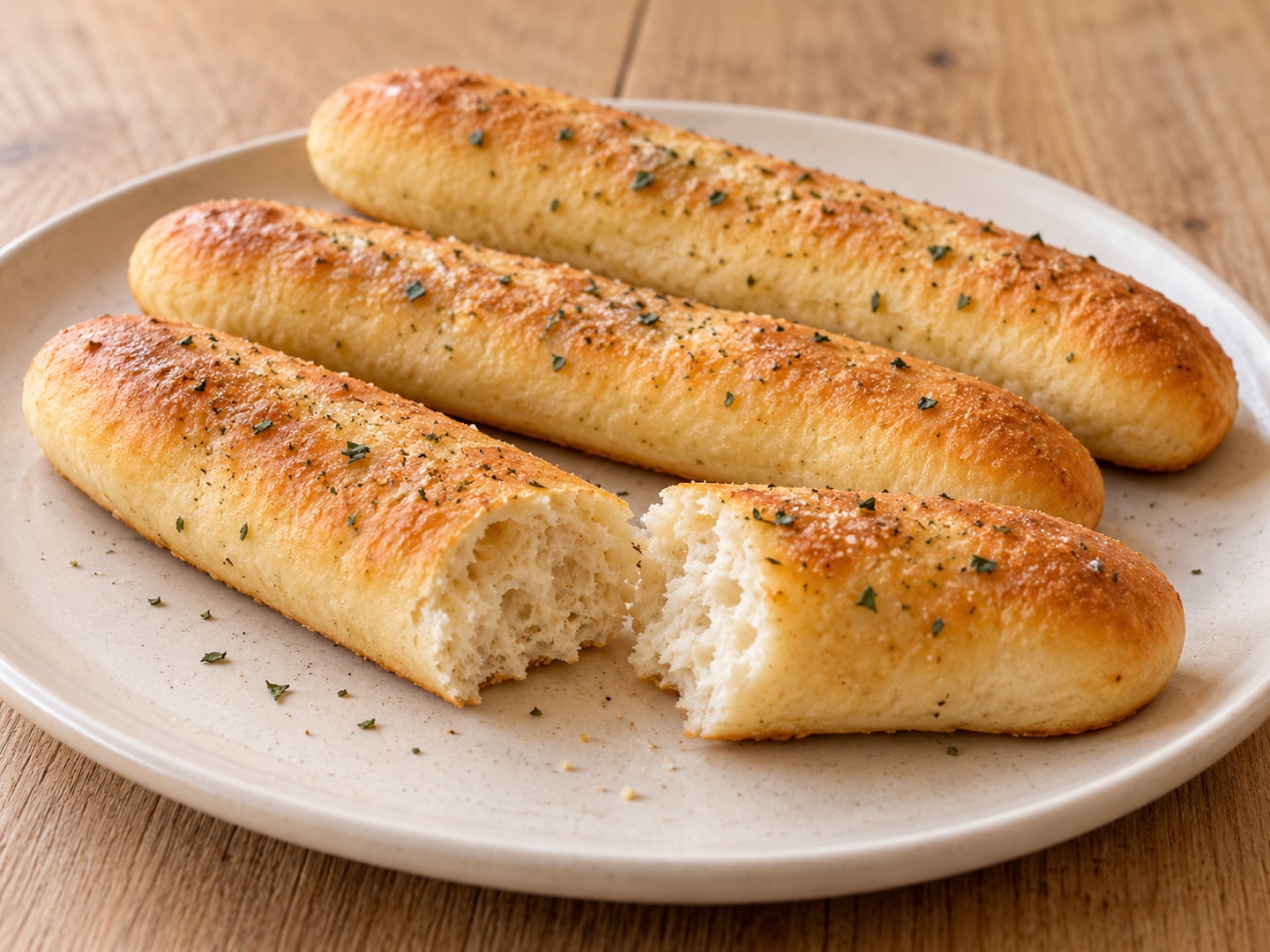
Olive Garden Inspired Breadsticks
Soft, fluffy breadsticks brushed generously with buttery garlic seasoning and finished with a sprinkle of salt. They're the perfect side for pasta, soup, or salad.
Inspired by Olive Garden
Prep
25 min + rise
Cook
12 min
Serves
12 servings
Difficulty
Medium
Cooking Tools
Pantry match
Uses the current servings and temporary recipe changes.
Missing 10 ingredients
- • 1 1/2 cups warm water
- • 2 1/4 teaspoons active dry yeast
- • 2 tablespoons granulated sugar
- • 4 cups all-purpose flour
- • 2 tablespoons softened butter
- • 1 tablespoon salt
- • 3 tablespoons melted butter
- • 1 teaspoon garlic powder
- • 1/2 teaspoon salt
- • 1/2 teaspoon dried parsley
View ingredient-by-ingredient match
- 1 1/2 cups warm waterMissing
- 2 1/4 teaspoons active dry yeastMissing
- 2 tablespoons granulated sugarMissing
- 4 cups all-purpose flourMissing
- 2 tablespoons softened butterMissing
- 1 tablespoon saltMissing
- 3 tablespoons melted butterMissing
- 1 teaspoon garlic powderMissing
- 1/2 teaspoon saltMissing
- 1/2 teaspoon dried parsleyMissing
Cook smarter
- Read the full method once before starting.
- Prep ingredients first for a smoother cook.
- Use the print button for a cleaner kitchen copy.
Guided cooking
Cook one clear step at a time
Your place is saved on this device.
Method
Recipe notes
The water should feel warm, not hot, and active yeast should form a foamy cap within 10 minutes. Keep the dough soft and slightly tacky; adding flour until it feels dry produces dense breadsticks.
Planning, storage, and serving
Storage and reheating
Cool completely and store airtight at room temperature for 1 day or refrigerate up to 3 days. Reheat at 325°F (165°C) for 5-7 minutes and brush lightly with fresh garlic butter; freeze unbuttered baked sticks up to 1 month.
Make-ahead tips
Mix and knead the dough, then refrigerate it after the first rise for up to 18 hours. Shape, proof until puffy, and bake the next day; mix the garlic butter while the oven heats.
What to serve with it
- - Tomato soup or minestrone
- - Pasta with marinara or Alfredo
- - A crisp Italian-style salad
Equipment needed
- - Large mixing bowl or stand mixer
- - Sheet pan with parchment
- - Pastry brush
Difficulty explained
The shaping is forgiving, but yeast temperature and allowing both rises to finish make this a medium recipe.
Recipe calculator
Nutrition facts
Alternatives
Apply a reviewed substitution to this temporary working copy. The published recipe stays unchanged.
Browse reviewed options
1-to-1 gluten-free baking flour
Use a commercial cup-for-cup blend that includes xanthan gum.
Plant-based butter
Use a firm, baking-style plant butter in the same amount.
Olive oil
For savory recipes, use 3 tablespoons olive oil for every 4 tablespoons butter.
Type the ingredient you're missing — we'll find what you can use instead.
Pitfalls to Watch Out For
- If the yeast never foams, the water may have been too hot or the yeast inactive; restart before adding flour.
- Under-proofed sticks spring back and bake tight; properly proofed dough looks puffy and an indentation fills slowly.
- Dark browning means they have gone beyond the intended soft texture; remove when just lightly golden and brush immediately.
Nutrition Context
- Breadsticks are primarily refined carbohydrate, with butter and the salty topping adding fat and sodium.
- One breadstick alongside soup, salad, or a protein-rich meal provides the experience without making bread the entire plate.
FAQ
How warm should the water be for the yeast?
Use water around 105-110 F: comfortably warm, not hot. Hot water can damage the yeast, while cool water makes the rise much slower.
Why are my breadsticks dense?
Too much flour, insufficient kneading, or a short rise can produce dense breadsticks. The dough should remain soft and slightly tacky before rising.
Can I use instant yeast?
Yes. Mix instant yeast directly with the flour and begin checking the dough earlier, since it may rise faster than active dry yeast.
Can the dough be prepared overnight?
After kneading, cover and refrigerate the dough overnight. Let it warm slightly, shape the breadsticks, and complete the second rise before baking.
How should breadsticks be reheated?
Wrap them loosely in foil and warm in a 325 F oven, then brush with a little fresh garlic butter. Microwaving can make them chewy.
What sides pair best with this dish?
Good pairings include Tomato soup or minestrone; Pasta with marinara or Alfredo; A crisp Italian-style salad. Choose one or two based on how substantial you want the meal to be.