
Seafood
Shrimp Aguachile Verde
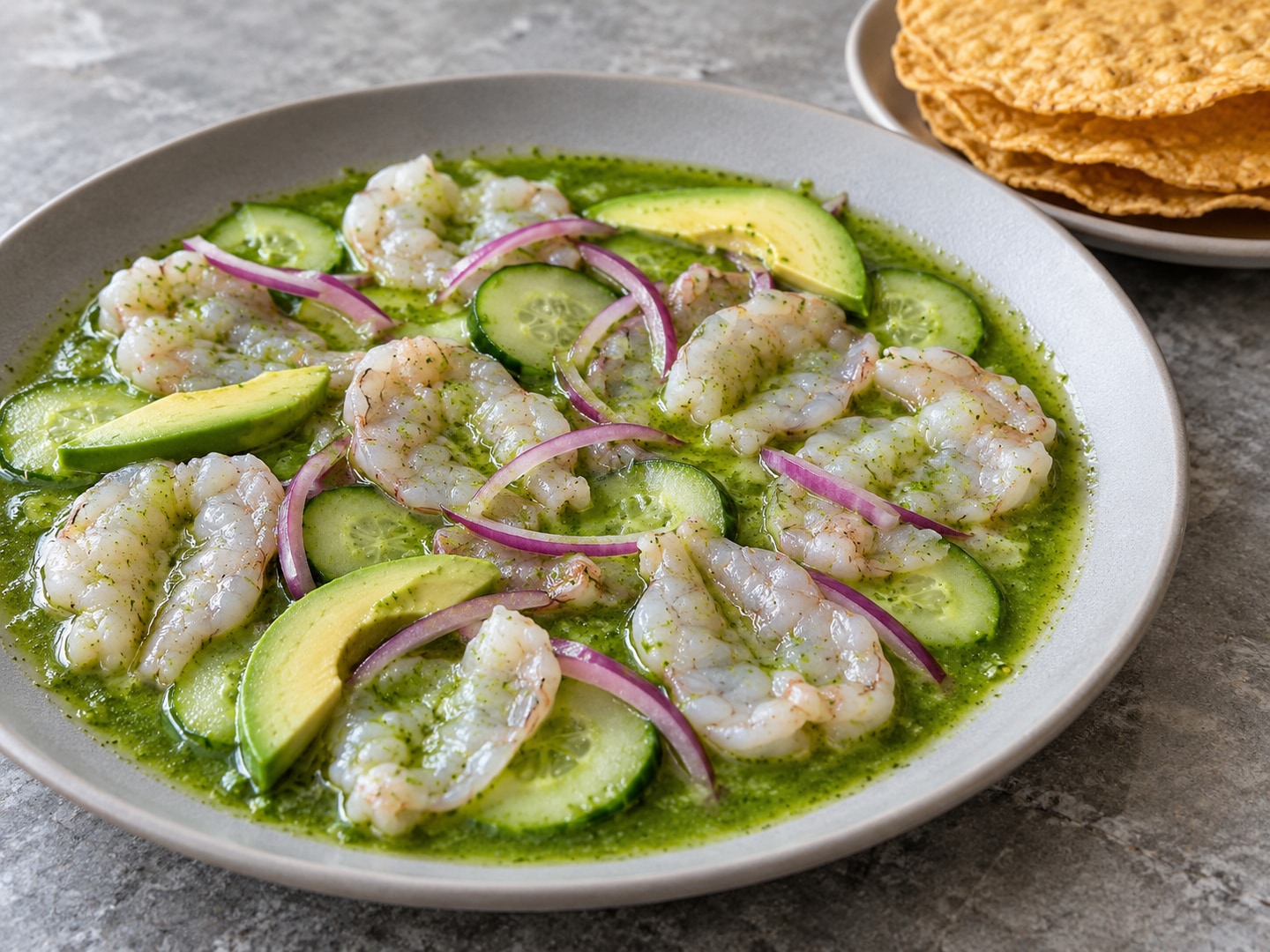
Butterflied shrimp in a vivid, icy lime-serrano-cilantro broth with cucumber and red onion, assembled minutes before serving for crisp texture and bracing heat.
Inspired by Sinaloa-style aguachile verde
Prep
35 min
Cook
1 min
Serves
4 servings
Difficulty
Medium
Cooking Tools
Pantry match
Uses the current servings and temporary recipe changes.
Missing 13 ingredients
- • 1 1/4 pounds very fresh large shrimp from a supplier who confirms they are intended for raw consumption
- • 1 teaspoon kosher salt, divided
- • 3/4 cup fresh lime juice
- • 2 serrano chiles, stemmed and roughly chopped
- • 1 packed cup cilantro leaves and tender stems
- • 1/2 small cucumber, peeled and chopped
- • 1/4 cup ice water
- • 1 small garlic clove
- • 1/2 teaspoon granulated sugar
- • 1 medium cucumber, thinly sliced
- • 1/2 small red onion, very thinly sliced
- • 1 ripe avocado, sliced
- • 8 crisp corn tostadas
View ingredient-by-ingredient match
- 1 1/4 pounds very fresh large shrimp from a supplier who confirms they are intended for raw consumptionMissing
- 1 teaspoon kosher salt, dividedMissing
- 3/4 cup fresh lime juiceMissing
- 2 serrano chiles, stemmed and roughly choppedMissing
- 1 packed cup cilantro leaves and tender stemsMissing
- 1/2 small cucumber, peeled and choppedMissing
- 1/4 cup ice waterMissing
- 1 small garlic cloveMissing
- 1/2 teaspoon granulated sugarMissing
- 1 medium cucumber, thinly slicedMissing
- 1/2 small red onion, very thinly slicedMissing
- 1 ripe avocado, slicedMissing
- 8 crisp corn tostadasMissing
Cook smarter
- Read the full method once before starting.
- Prep ingredients first for a smoother cook.
- Use the print button for a cleaner kitchen copy.
Guided cooking
Cook one clear step at a time
Your place is saved on this device.
Method
Recipe notes
Aguachile differs from ceviche through its thin butterflied shrimp, abundant chile-lime liquid, fresh blended green aromatics, and near-immediate service. For a lower-risk cooked version, poach the butterflied shrimp in gently simmering salted water just until 145°F, about 45 to 75 seconds, then chill in ice water and proceed without the 8-minute raw marination wait.
Planning, storage, and serving
Storage and reheating
Aguachile is intended for immediate service and is not a make-ahead leftover dish. Discard any portion that has warmed above 40°F for 2 hours total, and do not keep raw-marinated shrimp for the next day; cooked shrimp components may be refrigerated separately for 1 day.
Make-ahead tips
Slice cucumber and onion and wash cilantro up to 4 hours ahead, keeping everything covered and cold. Blend the green liquid no more than 1 hour ahead so its color stays fresh; butterfly and dress the shrimp immediately before serving.
What to serve with it
- - Crisp corn tostadas
- - Cold sliced avocado
- - A simple chilled lager or sparkling water with lime
Equipment needed
- - Sharp paring knife and seafood-only cutting board
- - High-speed blender
- - Chilled shallow serving platter
Difficulty explained
The blending is easy, but safe seafood sourcing, precise butterflying, strict cold holding, and serving immediately require deliberate preparation.
Recipe calculator
Nutrition facts
Alternatives
Apply a reviewed substitution to this temporary working copy. The published recipe stays unchanged.
Browse reviewed options
Lemon juice
Use lemon juice in the same amount when lime is unavailable.
Flat-leaf parsley
Use the same volume of chopped flat-leaf parsley if cilantro is disliked.
Cane sugar
Use the same amount of fine cane sugar.
Type the ingredient you're missing — we'll find what you can use instead.
Pitfalls to Watch Out For
- Treating lime juice as a cooking kill step creates false confidence; source and handle the shrimp as raw seafood throughout.
- Marinating for an hour makes shrimp chalky and tough, so prepare every garnish before the aguachile touches the seafood.
- Blending avocado into the liquid muddies the bright broth and makes it heavy; keep avocado in clean slices on top.
Nutrition Context
- Shrimp provides lean protein, while avocado supplies unsaturated fat and tostadas provide most of the starch and added oil.
- The chile-lime broth is intense without relying on much added fat, but salt and packaged tostadas can raise sodium.
FAQ
Does lime juice cook the shrimp safely?
No. Acid changes proteins and appearance but is not a reliable pathogen kill step. Treat the shrimp as raw unless it has reached 145°F with heat.
How is aguachile different from ceviche?
Aguachile features thin shrimp, a chile-forward liquid, and very short contact time; ceviche usually uses diced fish and a more restrained marinade.
Can I use cooked shrimp?
Yes. Briefly poach to 145°F, chill completely, and add the sauce at serving. The texture changes slightly, but the identity remains recognizable.
How can I reduce the heat?
Use one serrano or replace one with seeded jalapeño. Do not dilute heavily, which weakens the characteristic lime-chile intensity.
Can aguachile be made the night before?
No. The shrimp texture deteriorates and raw-seafood storage risk increases. Prep vegetables ahead, then assemble immediately before eating.
What sides pair best with this dish?
Corn tostadas, avocado, and a cold simple drink balance the sharp, spicy broth and chilled shrimp.